Five Forks Or Simpsonville? How To Choose Your Suburb
June 25, 2026
June 25, 2026
Trying to choose between Five Forks and Simpsonville? You are not alone. Many buyers looking in the Greenville area end up comparing these two suburbs because both offer convenience, growth, and a strong place in the Upstate market, but they live a little differently day to day. If you want a clearer way to weigh price, lifestyle, commute, and long-term fit, this guide will help you sort through the trade-offs. Let’s dive in.
At a high level, Five Forks and Simpsonville are not the same kind of place. Five Forks is a census-designated area in Greenville County, while Simpsonville is an incorporated city with its own downtown, parks and recreation department, and city-led planning.
That distinction shapes the feel of each market. Five Forks is more closely tied to county planning and the Woodruff Road corridor, while Simpsonville has a more visible city center and a stronger municipal identity. If you are deciding between them, that is a smart place to begin.
Five Forks fits buyers who want a more premium suburban setting with a strong owner-occupied feel. Census data shows an owner-occupied housing rate of 86.6%, a median owner-occupied home value of $452,200, median household income of $141,786, and an average household size of 2.87.
The area has also developed as a suburban bedroom community, with newer single-family subdivisions making up much of the housing pattern. County planning materials also note some larger estate lots and some planned higher-density support areas near the core.
In practical terms, Five Forks tends to appeal to buyers who want more space, newer housing stock, and a suburban layout built around driving between neighborhoods, shopping, and daily errands.
Simpsonville offers a different kind of suburban experience. It is an incorporated city with a downtown, civic amenities, and a more mixed development pattern shaped by city planning.
Census figures show a 68.5% owner-occupied housing rate, a median owner-occupied home value of $299,300, median household income of $82,457, and an average household size of 2.56. Those numbers point to a broader middle-market profile than Five Forks.
Simpsonville’s planning approach also emphasizes compact development, infill, and blending new growth with historic character. For you as a buyer, that can mean a wider housing mix and a stronger sense of town center activity.
For many buyers, price is the biggest separator. In May 2026, reported median sale prices were $587,149 in Five Forks and $327,254 in Simpsonville.
That is a major gap. It supports a simple takeaway: Five Forks generally sits in a higher-priced move-up market, while Simpsonville offers a lower entry point and more mid-market options.
Listing snapshots tell a similar story. In Five Forks, current examples ranged from about $359,900 to $2.5 million, including homes around $440,000, $525,000, and $899,900. In Simpsonville, recent sold examples included homes around $250,000, $335,000, $410,000, and about $450,000.
Price is only part of the decision. The housing mix matters too.
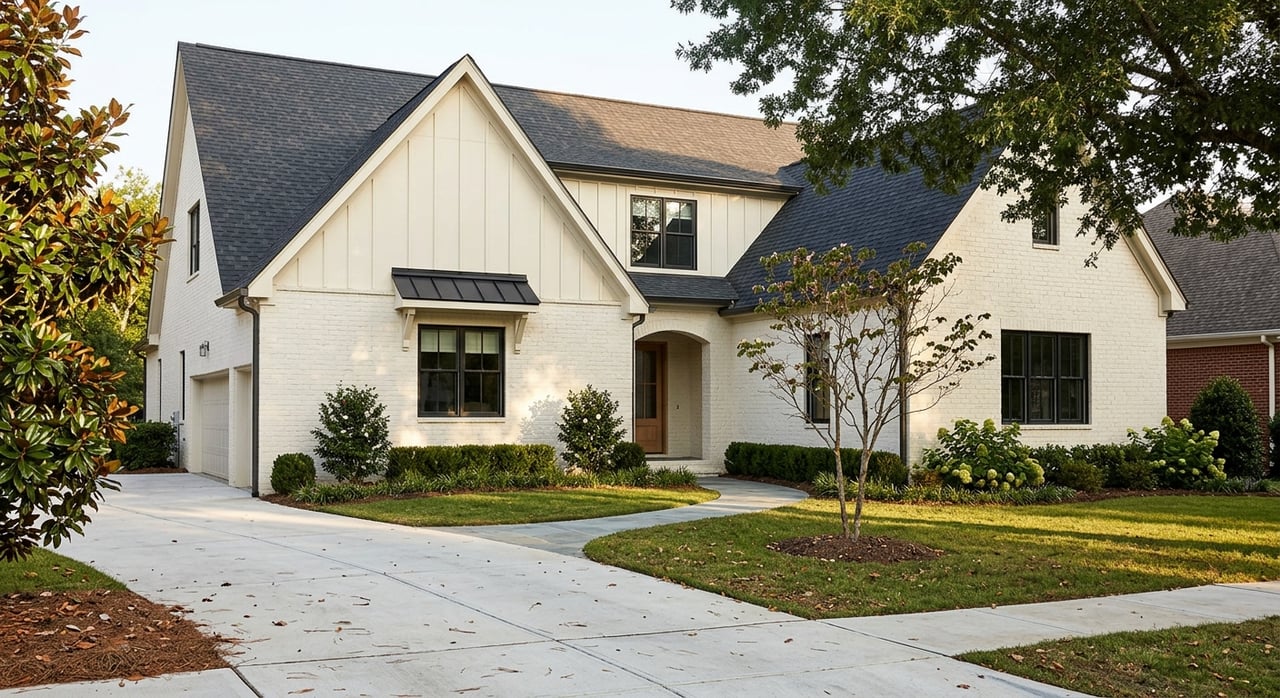
Five Forks is known more for newer subdivisions, single-family homes, and some larger-lot properties. If your wish list includes a newer home, more traditional suburban neighborhood patterns, or a higher price ceiling, Five Forks may line up better with your goals.
Simpsonville tends to offer more variety. Its planning framework supports a mix of newer development, infill, and areas connected to a downtown setting. If you want more options across price points and property types, Simpsonville may give you a broader search.
Both places are convenient in different ways, but the day-to-day feel is not identical.
In Five Forks, convenience often means quick access to a large commercial node with grocery stores, shops, restaurants, gas stations, drug stores, and professional offices. The trade-off is that the area is very car-oriented, and county planning documents note poor pedestrian access and limited sidewalk connections between neighborhoods and commercial areas.
Simpsonville still depends heavily on cars, but it offers more of a town-center experience. City materials describe downtown as a hub for restaurants, boutiques, a food hall, murals, mixed-use development, and recreational amenities, including the Simpsonville segment of the Swamp Rabbit Trail and CCNB Amphitheatre at Heritage Park.
If you prefer suburban convenience centered on retail corridors, Five Forks may feel efficient. If you want errands and outings to feel more tied to a visible civic core, Simpsonville may feel more balanced.
The average commute times are fairly close, but there is still a difference. Five Forks residents report a mean travel time to work of 25.2 minutes, compared with 22.4 minutes in Simpsonville.
That 2.8-minute gap is not huge on paper, but traffic patterns matter more than the raw average. County planning materials specifically flag congestion in the Five Forks and Woodruff Road area, along with limited convenient access to major employment corridors and poor sidewalk connectivity.
So if your schedule depends on smooth daily driving, do not just compare addresses. Think about how often you will use Woodruff Road, when you travel, and how much road congestion affects your stress level.
This is where many buyers find clarity. The question is not only where you can buy, but how you want your life to feel once you get there.
Five Forks feels more like a classic suburban zone shaped by neighborhoods, commercial hubs, and county-managed growth. It can be a strong fit if you value larger homes, newer communities, and a more residential setting.
Simpsonville feels more like a city-centered suburb with a downtown, visible civic amenities, and a planning model built around reinforcing that center. If you want a stronger sense of place beyond the subdivision entrance, Simpsonville may stand out more.
There is no universal resale winner here. The better question is which buyer pool you are more likely to match when it is time to sell.
Five Forks has a more premium, owner-occupied profile, with higher prices, higher household income, and a stronger concentration of suburban single-family housing. That can support a higher price ceiling, but it may also mean a narrower pool of future buyers at certain price points.
Simpsonville’s lower median pricing, broader housing mix, and downtown-oriented amenities may attract a wider range of buyers. That can help resale flexibility, especially in more accessible price bands.
If you are stuck, use these questions to guide your choice:
Your answers usually point in one direction pretty quickly.
Choose Five Forks if your top priorities are a newer, larger-lot suburban home, a more premium owner-occupied market, and a higher price ceiling.
Choose Simpsonville if your top priorities are a lower entry price, a broader housing mix, and a stronger downtown and civic feel.
Neither choice is automatically better. The right choice is the one that fits your budget, routine, and long-term goals with the fewest compromises.
If you want help comparing neighborhoods, commute trade-offs, or home options in real time, David Dunford can help you sort through the details and make a confident move.
Stay up to date on the latest real estate trends.
Whether you're buying, selling, or just need some advice, David is here to provide expert, personalized assistance