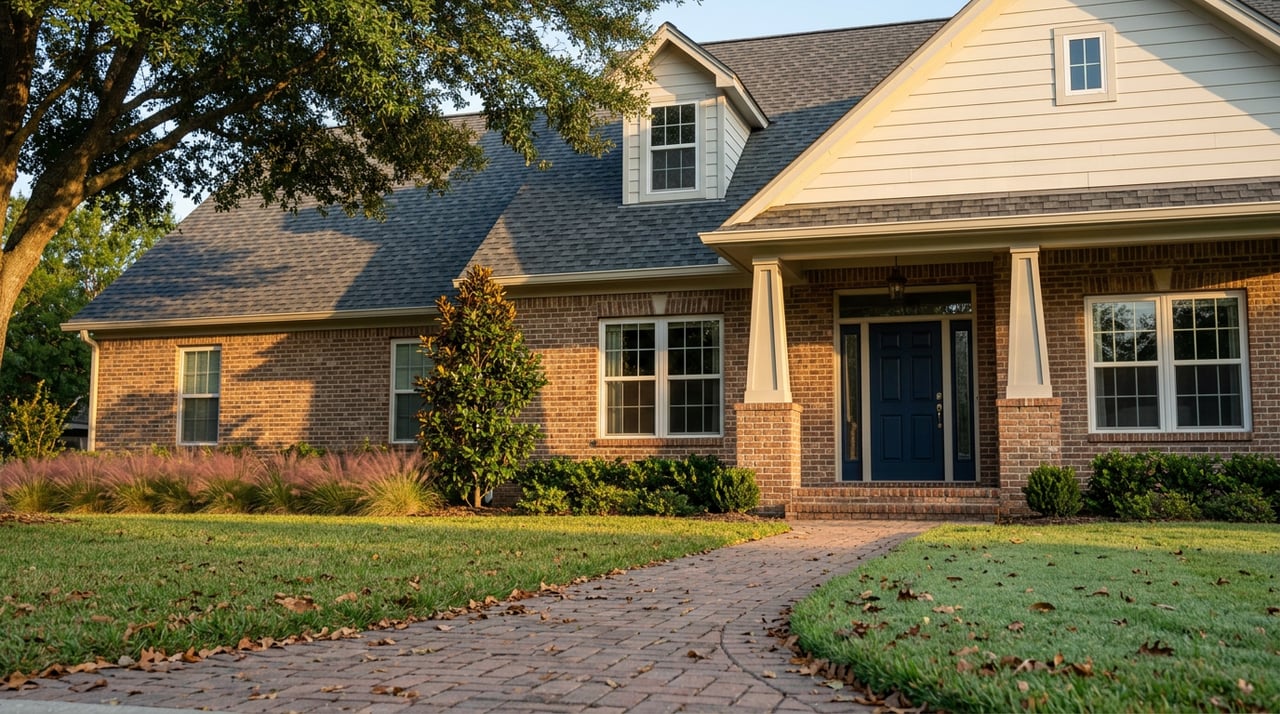
Greer Didn't Raise Its Tax Rate. Your Bill Might Climb Anyway.
September 17, 2026
September 17, 2026
If you're comparing Greer to Simpsonville or Five Forks on a spreadsheet, you've probably pulled up the same numbers everyone pulls up: median price, days on market, maybe a school rating. Property taxes get a single line, usually copied from whatever millage figure shows up first in a search. That line is the wrong one to trust.
Greer's city council has voted twice in the past two budget cycles to hold or cut its millage rate, and both times the tax bill on the average home still went up. That's not a contradiction. It's how South Carolina's reassessment system works, and it's the exact kind of detail that gets lost when a buyer compares two towns by their headline tax rate instead of by what actually lands in an escrow account.
A mill is one dollar of tax for every thousand dollars of a property's assessed value. The rate tells you how hard the city is squeezing. It says nothing about how much there is to squeeze.
Greer's city millage sat at 113.0 mills heading into the 2025-26 budget year. City Administrator Andy Merriman told council that the citywide assessed value had jumped 15% that year, which meant every mill of tax was now worth about 8.5% more in raw revenue than the year before. Council responded by cutting the rate 2 mills, landing at 111.0, and framed the budget as a tax decrease. The math still worked out to more total dollars collected than the prior year, just spread across a lower rate on a bigger base.
The following year, for the 2026-27 budget, council held the rate at that same 111.0 mills. But the value of a single mill kept climbing, this time by an estimated 9.9%, to roughly $334,605 per mill, up from about $258,441 two years earlier. Same rate. Bigger check.
| Fiscal Year | City Millage | What Changed |
|---|---|---|
| 2024-25 | 113.0 mills | Baseline rate |
| 2025-26 | 111.0 mills | 2-mill cut, but assessed value up 15%, revenue per mill up ~8.5% |
| 2026-27 | 111.0 mills | Rate held flat, revenue per mill up ~9.9% to about $334,605 |
None of this is hidden. It's in the public council record. It's just not the number most people screenshot when they're deciding between towns.
Two council members tried to do something about it. During the 2026-27 budget discussion, Wryley Bettis proposed cutting the millage by 2 mills, a move that would have cost the city roughly $668,000 in revenue. Charles Lander offered a fallback amendment for a 1-mill cut. Both failed. The budget passed 5-2, with Mayor Rick Danner and council members Jay Arrowood, Karuiam Booker, Mark Hopper, and Paul Lamb voting to keep the rate where it was, and Bettis and Lander voting against the final budget.
Read that vote plainly and it says something useful for anyone shopping Greer against a neighboring town: holding a rate flat while the tax base grows isn't a neutral act. It's a choice council makes every June, and this particular council chose to keep collecting more per mill rather than trim the rate to offset reassessment gains. That's worth knowing before you assume "no tax increase" in a headline means your bill won't move.
Greer sits across two counties, Greenville and Spartanburg, and which side of that line a house falls on changes more than the return address on the tax bill. Estimated annual property tax bills across Greer addresses run from around $612 to as much as $1,761, according to property-tax data from Ownwell, a spread driven mostly by which county's school levies and assessment districts apply. On the Spartanburg County side specifically, Greer's median effective property tax rate runs about 0.88%, noticeably above South Carolina's statewide median of 0.66%.
Two houses with the same square footage and the same city limits sign at the end of the street can carry very different tax bills depending on which county actually taxes them, because Greenville County and Spartanburg County run separate reassessment cycles and separate school district levies on top of the shared city millage. If you're cross-shopping a listing in Greer against one in, say, Simpsonville or Five Forks, the county line matters as much as the subdivision name. Ask which county a specific address falls under before you compare its tax line to anything else on your list.
Here's the part that catches new buyers off guard at closing, and it applies whether you're buying in Greer's Greenville County side or its Spartanburg County side. South Carolina taxes owner-occupied primary residences at a 4% assessment ratio. Every other property, including a home you haven't yet claimed as your primary residence, defaults to 6%. On a $350,000 home, that gap alone can roughly double the base tax bill.
The county doesn't know your new house is a primary residence until you tell it. You have to file a Legal Residence Exemption application with the county assessor, generally by January 15 of the year after you close, to lock in the 4% rate for that tax year. Miss the window and you're paying the 6% rate on a house you live in every day. It's a quick form, but it's one more thing your closing checklist needs alongside the inspection and the insurance binder, and it's easy to lose track of during a move.
None of this makes Greer a bad buy. The city is growing fast enough that its own tax base keeps expanding, which is exactly why council can talk about "no increase" and still bring in more money every year. That's a sign of a market with real demand behind it, not a red flag.
But if you're weighing Greer against another Upstate town, don't stop at the millage rate. Ask three questions instead: what did the value of a mill do here over the last two budget cycles, which county does this specific address fall under, and has the seller (or will you, as the buyer) filed the Legal Residence Exemption. Those three answers tell you more about your actual monthly carrying cost than any headline about a frozen tax rate ever will.
If you're sorting through Greer neighborhoods and want a second set of eyes on what a specific address's tax picture looks like before you write an offer, that's exactly the kind of groundwork David Dunford walks Upstate buyers through every week. Let's Connect and get you the real numbers before you're the one filing paperwork after closing.
Stay up to date on the latest real estate trends.
Whether you're buying, selling, or just need some advice, David is here to provide expert, personalized assistance